Start with people and the building
Stay clear of downed lines, unstable trees and damaged parts of the structure. A roof is not a safe place for a homeowner to investigate during or immediately after severe weather. If the building is unsafe, follow emergency officials’ directions.
From a safe location, share what changed: a missing section of covering, exposed decking, a new leak or debris on the roof. Photos taken safely from the ground or inside can help explain the concern without turning the assessment into a ladder project.
Temporary protection and permanent repair are different jobs
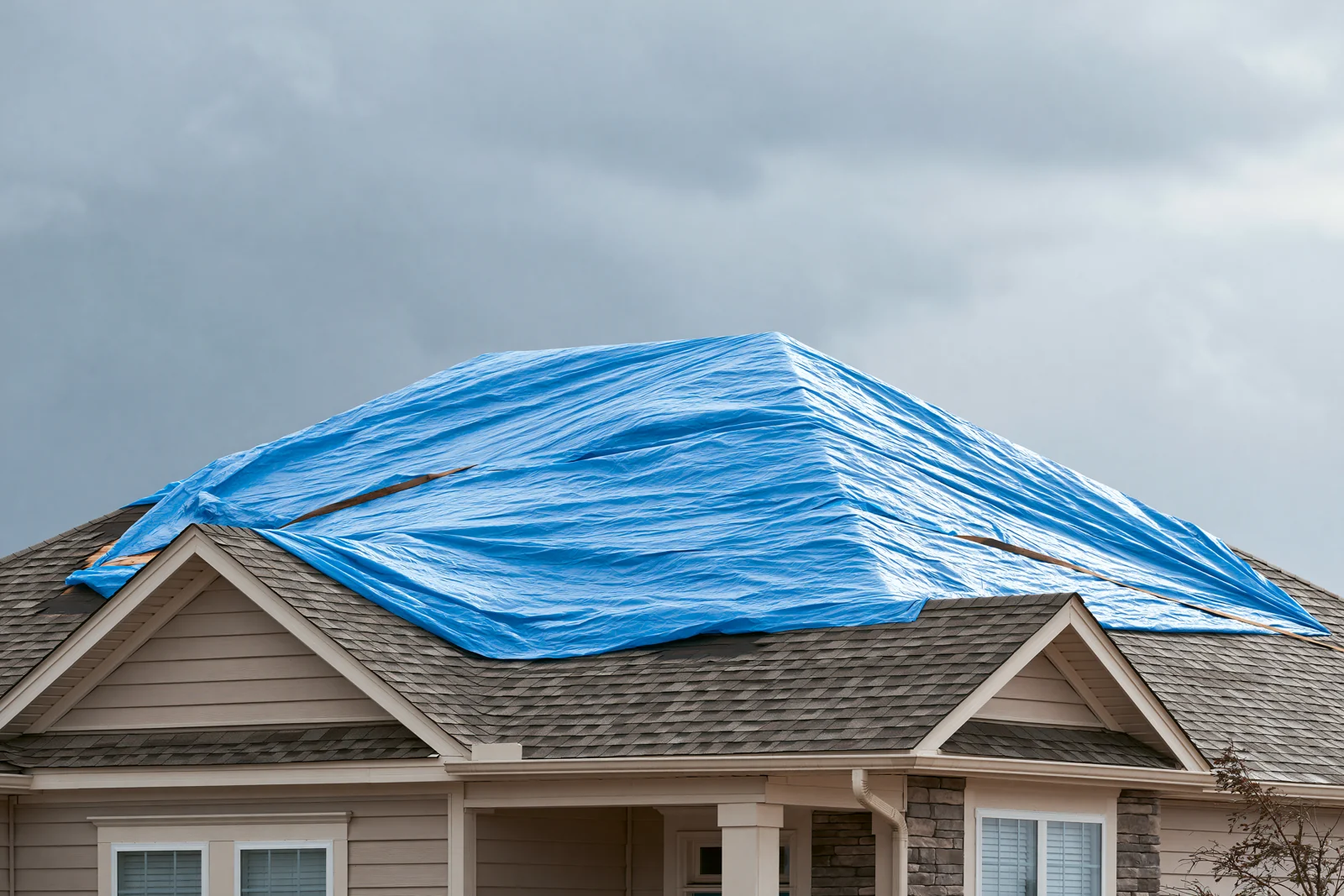
An opening that admits rain may need temporary protection before a full scope can be agreed. A tarp or other temporary measure limits exposure; it does not establish that the roof has been permanently repaired.
The permanent work still needs to address the damaged materials and the connections around them. Keep the temporary work documented, including receipts if insurance is involved. The insurer’s process and the safety of the building help determine the order of the next steps.
Hail marks are not all the same
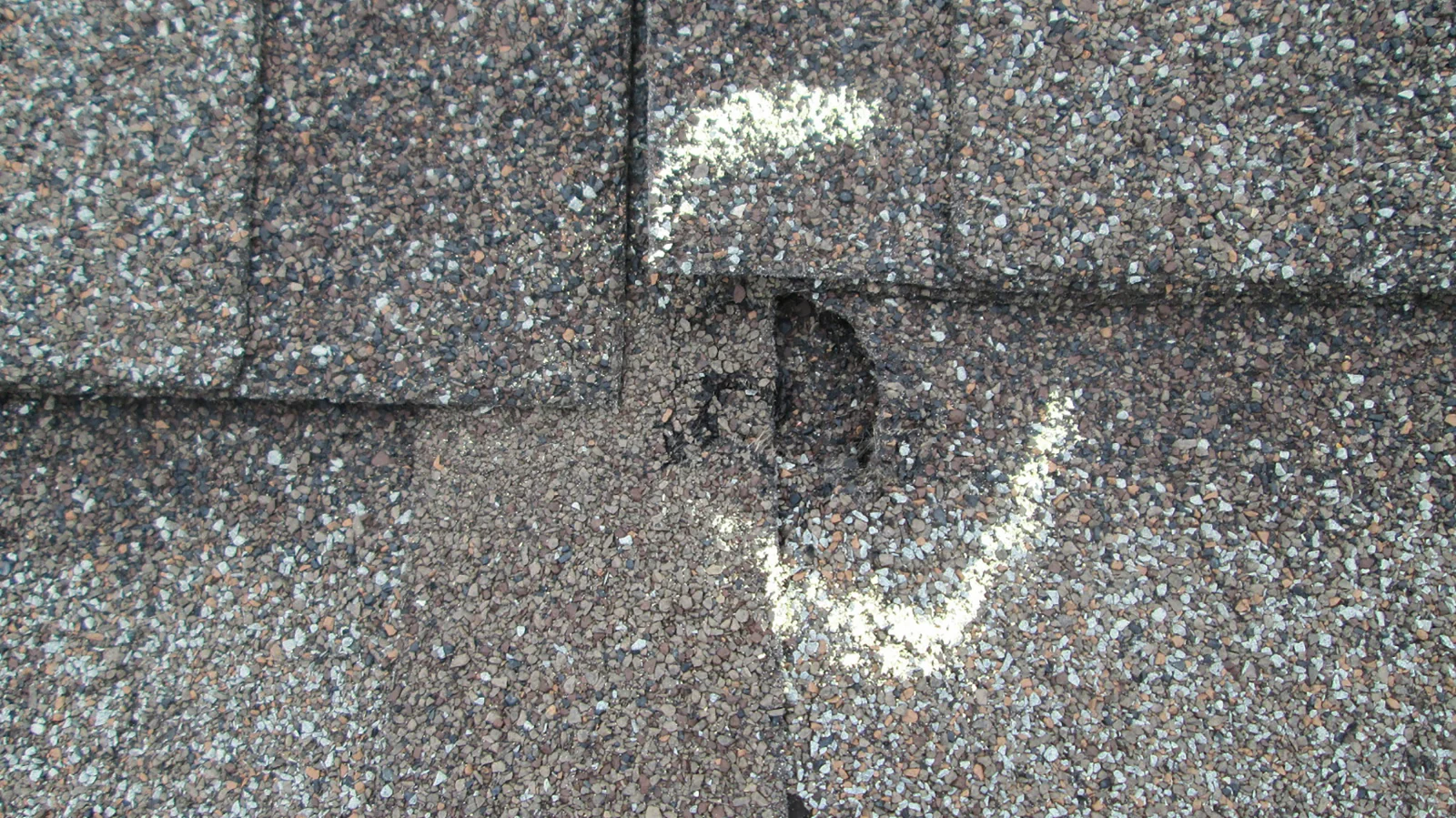
Hail can affect roofing materials differently depending on the covering, condition, support and impact. An evaluation needs to distinguish damage from wear, installation issues and marks unrelated to the event. A nearby hail report alone does not identify damage at your address.
On shingles, the assessment goes beyond a photograph of loose granules. On metal and low-slope systems, dents, seams, attachment and membrane condition raise different questions. The repair recommendation should describe the roof in front of the contractor, not a universal result for every house in the storm path.
Wind damage includes the connections
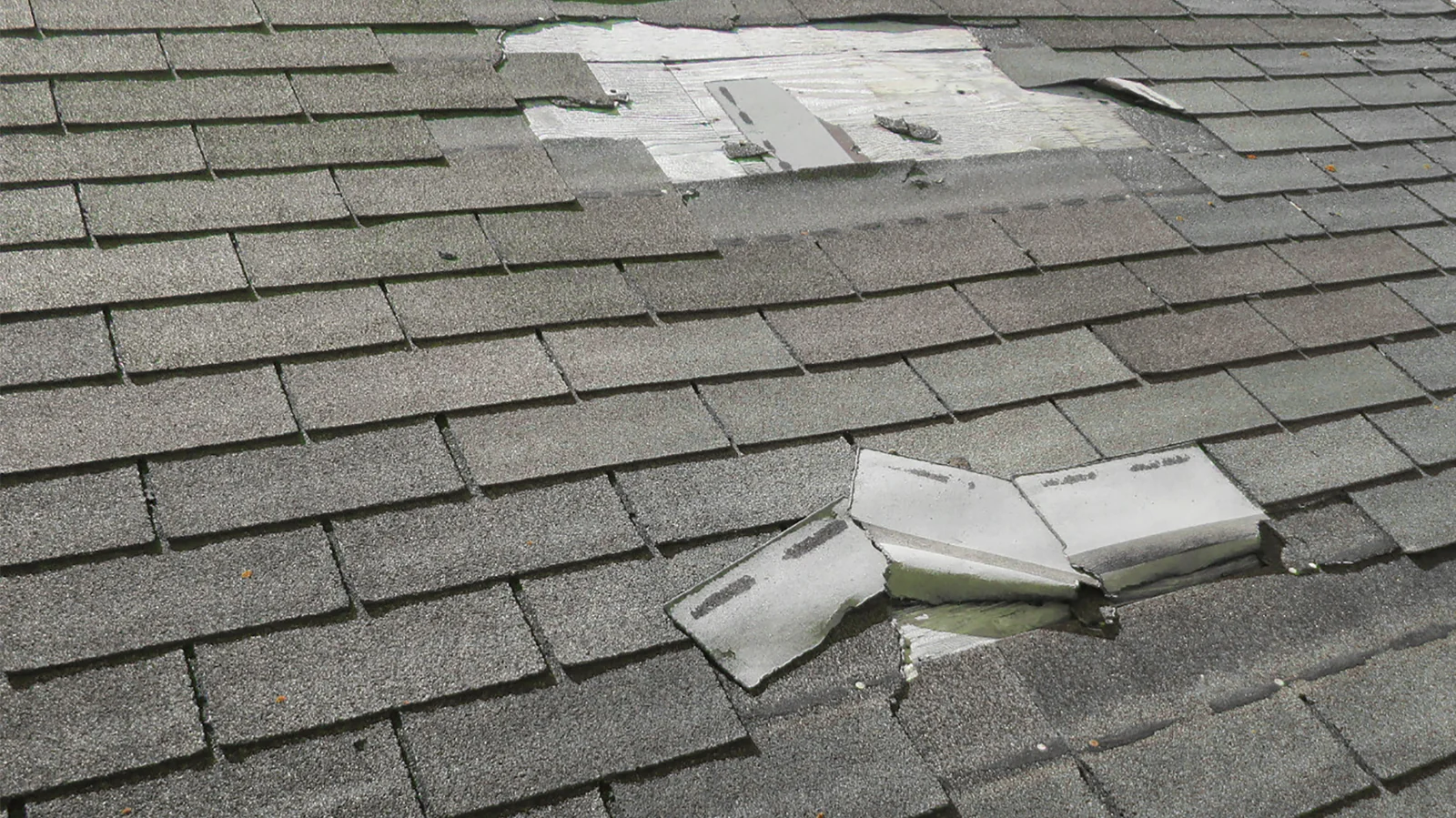
Missing or displaced covering is easy to see, but edges, flashings and roof penetrations can also be affected. Water can enter where a detail has opened even when a large area of the covering remains in place.
The inspection should connect the visible condition to a proposed repair or replacement. Damage in one area does not automatically condemn the whole roof, and a roof that looks largely intact from the yard is not necessarily free of an open connection.
Let the policy and roof scope keep their own roles
If a claim is being considered, the insurer determines coverage under the policy. The roofing contractor explains the physical work and supplies its construction estimate. Neither a storm announcement nor a contractor’s sales pitch guarantees a replacement payment.
For future resilience, impact-resistant materials and a stronger roof assembly are useful topics during replacement. A test rating describes performance under a stated test; it is not a promise that the roof will suffer no damage in the next storm.
Further reading
Common questions
Does a hail report prove my roof is damaged?
No. It establishes reported weather in an area. The roof’s materials, condition and actual damage pattern must be evaluated at the property.
Does an impact-resistant shingle make a roof hail-proof?
No. Impact testing helps compare performance under defined conditions. Roof condition, installation and the actual storm still matter.
Find companies for the work.
Explore actual roofing services, business details and Google review totals in the directory.
Browse roofing companies