Separate rain entry from moisture moving out of the house
A roof leak brings water through an opening or failed detail. Moist indoor air entering a colder attic can create a different moisture problem. The visible stain or damp material does not always identify which process is happening.
An assessment should trace the source. A leaking pipe boot needs a roof repair. Air leakage from the living space and an exhaust fan ending in the attic need a different response. Solving one does not automatically solve the other.
Ventilation works with the attic’s design
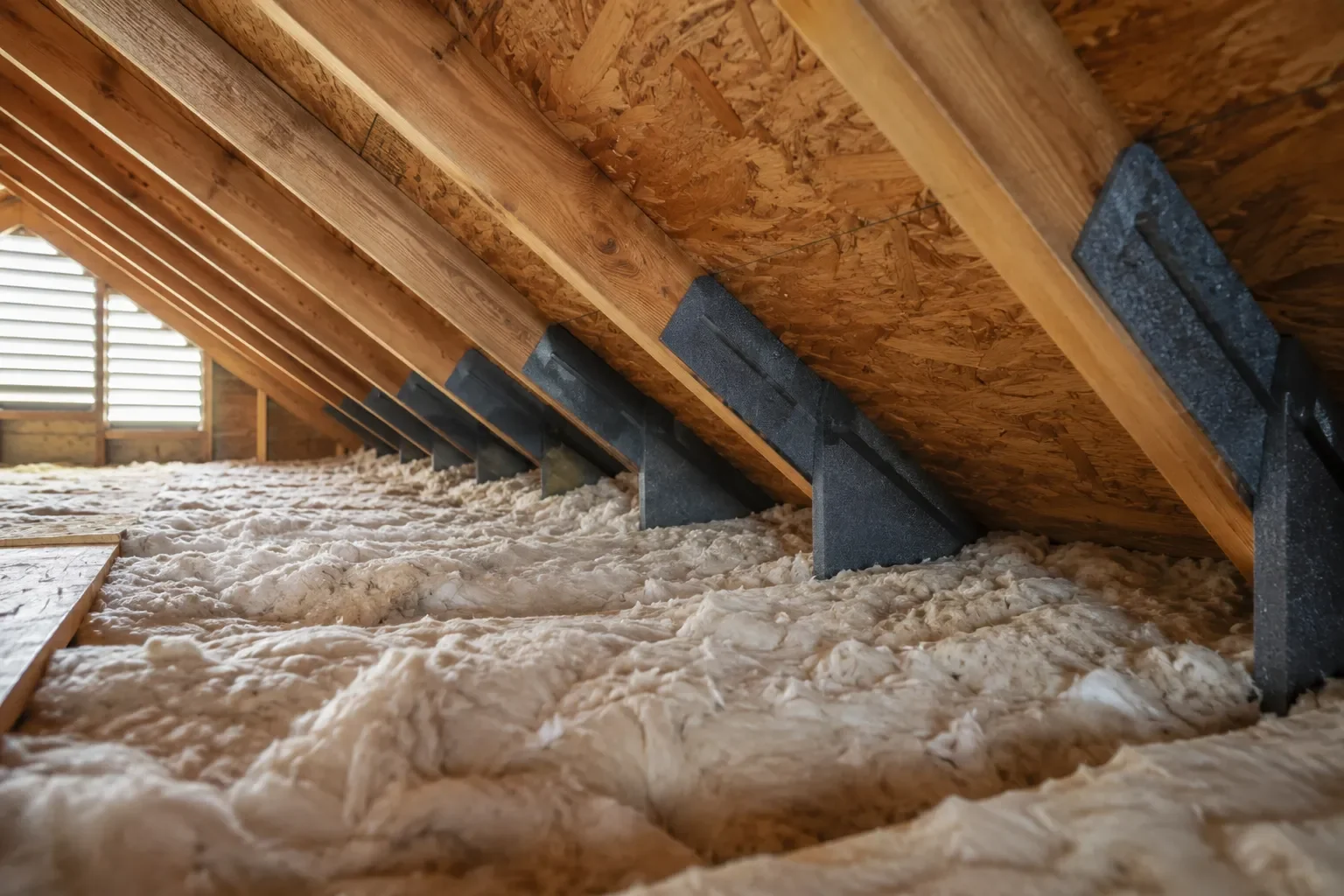
A vented attic depends on an intended air path and openings that are not blocked. The intake and exhaust arrangement has to suit the roof and its manufacturer and code requirements. More openings placed at random are not necessarily a better system.
Some roof assemblies are designed differently, including conditioned or unvented assemblies. Advice for a conventional vented attic should not be applied to every roof without understanding that design. The existing insulation location and air-control layers matter.
Air sealing and insulation do different jobs
Insulation slows heat flow. Air sealing limits uncontrolled air movement between spaces. Ventilation manages the intended exchange with outdoors in an attic designed for it. Treating those as the same task can leave the moisture source in place.
Before adding insulation, existing roof leaks and moisture concerns need attention. Insulation should not block the intended ventilation route. Work around equipment and penetrations also needs to respect safety and the building’s actual design.
Replacement is a useful time to coordinate the details
When roof work changes vents or the covering, the proposal should account for the existing attic arrangement. A shingle upgrade does not determine the correct ventilation plan by itself.
The relevant parties may include the roofer and another qualified building professional when moisture, air sealing or mechanical exhaust is involved. Keep the responsibilities clear. A roofing proposal should not quietly promise a whole-house energy result it has not designed or measured.
Ask for an explanation of the cause and the change
The useful outcome is a plain account of what was found and what the proposed work changes. Is the issue rain entry, blocked airflow, indoor moisture reaching the attic or a combination?
A new vent count is not the entire answer. The plan should connect the roof details, the attic configuration and the source of the moisture. That explanation makes the work easier to evaluate without asking a homeowner to diagnose the attic alone.
Further reading
Common questions
Will adding vents fix every damp attic?
No. Roof leaks, air leakage from the house, exhaust arrangements and the attic design can all affect moisture. The source needs to be identified.
Does insulation replace ventilation?
No. They do different jobs. The assembly needs an appropriate combination of insulation, air control and, where designed, ventilation.
Find companies for the work.
Explore actual roofing services, business details and Google review totals in the directory.
Browse roofing companies